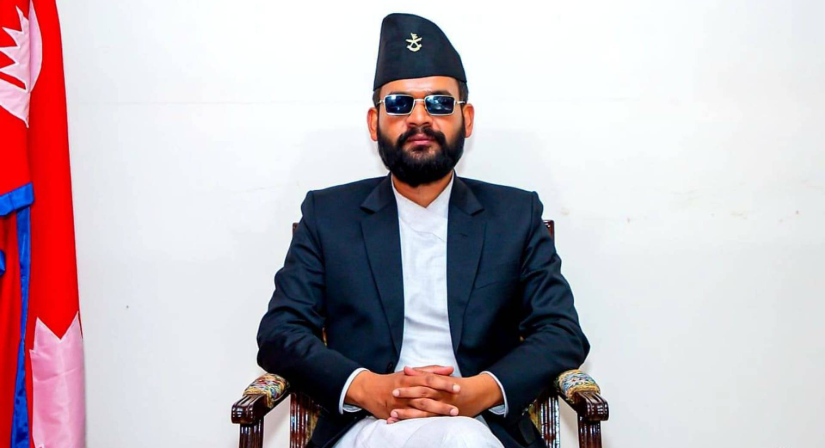
Balen Shah Biography: Age, Wife, Engineering, Rap Career, Mayoralty, and Rise as Prime Minister of Nepal
Introduction
Balendra Shah, widely known as Balen Shah, is a prominent Nepalese politician, structural engineer, and former hip-hop artist currently serving as the Prime Minister of Nepal. Emerging as a revolutionary figure in South Asian politics, Balen Shah first captured national and international attention in 2022 when he was elected Mayor of Kathmandu Metropolitan City as an independent candidate. Leveraging widespread youth support, structural reform agendas, and data-driven administrative style, he led the Rastriya Swatantra Party (RSP) to a historic landslide victory in the 2026 general elections, becoming the world’s youngest serving state leader at age 36.
Quick Profile & Key InformationQuick Profile & Key Information
| Parameter | Details |
| Full Name | Balendra Shah (Balen) |
| Date of Birth | April 27, 1990 |
| Age | 36 Years (as of 2026) |
| Birthplace | Naradevi, Kathmandu, Nepal |
| Current Office | Prime Minister of Nepal (Assumed March 27, 2026) |
| Previous Role | Mayor of Kathmandu Metropolitan City (May 2022 – Jan 2026) |
| Political Party | Rastriya Swatantra Party (RSP) |
| Parliamentary Constituency | Jhapa 5 |
| Height | 6 Feet 1 Inch (Approx. 185 cm) |
| Education | M.Tech in Structural Engineering (NITTE, Bengaluru, India) |
| Father | Dr. Ram Narayan Shah (Ayurvedic Practitioner) |
| Spouse | Sabina Kafle (Public Health Professional) |
| Key Directives | 100-Point Delivery-Based Reform Agenda |
Early Life and Educational Background
Balen Shah was born on April 27, 1990, in Naradevi, Kathmandu, into a family with deep roots in community healthcare; his father, Dr. Ram Narayan Shah, was a respected practitioner at the historic Naradevi Ayurvedic Hospital.
Balen completed his schooling in Kathmandu before pursuing higher technical education:
- Civil Engineering: He earned his Bachelor’s Degree in Civil Engineering from Himalayan WhiteHouse International College in Kathmandu.
- Structural Engineering (M.Tech): To specialize in earthquake-resilient infrastructure and urban design, he moved to India and earned his Master’s Degree (M.Tech) in Structural Engineering from NITTE Meenakshi Institute of Technology in Bengaluru, Karnataka.
Prior to entering full-time politics, Balen practiced professionally as a structural engineer, auditing building safety, assessing earthquake resilience, and consulting on public and private development projects across Nepal.
Artistic Career: Pioneer of Nepalese Hip-Hop (Nephop)
Long before entering public administration, Balen Shah was a celebrated youth icon through his pioneering role in Nepal’s underground hip-hop movement.
movement.
- Raw Barz Underground Battles: He gained national visibility in 2013 through Raw Barz, Nepal’s underground rap battle platform, where his sharp social commentary, intellectual wordplay, and calm demeanor set him apart.
- Socio-Political Themes: Unlike mainstream commercial artists, Balen used his songs to address systemic corruption, youth unemployment, foreign migration, and social inequality.
- Famous Songs:
- “Sadak Balak” (Debut 2012)
- “Nepal Haseda”
- “Sabai Neta Chor Ho”
- “Marpha Ko Madira”
- “Gharipatan”
The Mayoral Era (May 2022 – January 2026)
In early 2022, Balen Shah announced his candidacy for Mayor of Kathmandu Metropolitan City as an Independent Candidate, choosing the Walking Stick (लौरी) as his election symbol.
- Landslide Victory: Defeating veteran candidates from established political parties with over 61,000 votes, he became the first independent mayor in Kathmandu’s history.
- Urban Governance Reforms:
- Encroachment Clearance: Reclaimed public land, cleared illegal structures, and restored basement parking spaces to reduce traffic congestion.
- Waste Management Overhaul: Implemented long-term waste segregation models and improved management at the Banchare Danda landfill site.
- Education & Scholarship Directives: Enforced strict monitoring in private schools to guarantee transparent scholarship distribution for low-income students.
- Healthcare Compliance: Mandated that private and community hospitals allocate 10% of their total beds free of charge to underprivileged patients.
- Cultural Preservation: Invested heavily in restoring traditional stone spouts (Dhunge Dhara) and preserving indigenous Newa architectural heritage.
Key Prime Ministerial Initiatives & Governance
Upon taking office, Prime Minister Balen Shah introduced a transformative governance framework centered on institutional accountability:
- 100-Point Reform Agenda: Launched a Delivery-Based Governance model where every ministry operates under measurable targets, public performance tracking, and strict deadlines.
- Cabinet & Administrative Streamlining: Reduced federal ministries from 22 to 17 and banned party-affiliated political unions within civil service and educational institutions.
- Anti-Corruption & Asset Audits: Established a high-level Asset Investigation Commission to audit the wealth of senior public officials from 2048 BS onward.
- Fortnightly Salary System: Transformed Nepal into the first South Asian country to pay civil servants, military, and police personnel on a 15-day pay cycle to boost domestic economic liquidity.
- Global Climate Advocacy: Represented Nepal at the United Nations General Assembly (UNGA), delivering powerful calls for climate justice and international support for Himalayan ecosystems.
Personal Life
Balen Shah is married to Sabina Kafle, a dedicated public health professional. Despite his intense administrative schedule as head of state, Balen maintains a disciplined lifestyle, balancing executive governance duties with public health initiatives, literary reading, and structural engineering studies.
Conclusion and Legacy
Balen Shah’s historic journey—from underground rapper and structural engineer to Mayor of Kathmandu and Prime Minister of Nepal—represents a monumental paradigm shift in South Asian governance. His rise proves that educated, technically qualified, and transparent youth leadership can successfully reform entrenched political systems and set new standards for public service.